Bus advertising helps retail brands build awareness, promote products and support store visits by placing campaigns along everyday routes through high streets, shopping areas, residential neighbourhoods and transport hubs. Retailers can use bus sides, rears, full wraps and interior advertising, with campaigns planned around local store catchments or wider city coverage.
For retail brands, the important part is deciding what role the buses need to play. A campaign supporting one store opening requires a different approach from a national retailer launching a seasonal collection or an ecommerce brand looking to become more familiar in a particular city.
From planning and delivering bus advertising for brands across retail and consumer sectors, we have found that route selection, format, fleet distribution, timing and creative work best when they follow the retail objective. The busiest route or largest format is not automatically the right choice for every campaign.
The starting point should be the customer journey. Where are potential customers travelling, which shopping locations matter and what should they remember or do after seeing the campaign?
How Bus Advertising Works for Retail Brands
Buses travel through the areas where retail activity happens.
Depending on the city and route, this can include high streets, shopping centres, residential areas, business districts, universities, transport interchanges and leisure destinations. This gives retailers opportunities to place campaigns within journeys that can eventually lead to a store, shopping area or online purchase.
Retail brands commonly use bus advertising to support:
- New store openings
- Product and collection launches
- Local store awareness
- Seasonal promotions
- Sales periods
- Brand awareness
- Christmas campaigns
- Back to school activity
- Ecommerce campaigns
- Entry into new UK markets
The objective then shapes the rest of the media plan.
Match the Bus Strategy to the Retail Objective
A useful way to plan retail bus advertising is to start with what needs to happen after someone sees the campaign.
Driving Visits to a Specific Store
When store visits are the priority, route planning should begin with the store's catchment area.
Brands can consider routes connecting the location with nearby residential areas, railway or Underground stations, workplaces and other shopping destinations.
The creative can also become more location led, using messages such as:
- Now open
- New store now open
- Available in store
- Sale now on
From our experience, proximity alone should not determine the route. A route that connects relevant customer areas with the shopping destination can be more useful than simply choosing the bus that passes closest to the storefront.
Building Recognition Across a City
When the objective is broader brand awareness, the campaign can be distributed across several relevant routes.
This approach can suit:
- National retailers
- Fashion brands
- Supermarkets
- Beauty brands
- Consumer technology
- Home and furniture retailers
- Ecommerce businesses
Here, the role of the campaign is to build familiarity as people repeatedly encounter recognisable creative during everyday journeys.
In London specifically, the scale of the network gives advertisers hundreds of routes to consider, so route selection can be shaped around audience and geography rather than treating the whole capital as one market.
Route Planning Should Follow the Customer Journey
The best bus routes for a retail campaign are the routes that connect relevant audiences with commercially important locations.
For a physical retailer, that might mean routes serving:
- High streets
- Shopping centres
- Retail parks
- Flagship stores
- Residential catchments
- Railway stations
- Universities
- Office districts
For an ecommerce business, there may be no physical store to plan around. Routes can instead be selected according to the areas where target customers live, work and spend their time.
This distinction matters.
A local store campaign may benefit from concentrated activity within a defined area. A brand building campaign may need buses distributed across several neighbourhoods.
Our guide to choosing bus routes for advertising covers the audience and geographical factors that can inform this decision.
Choose Bus Formats Around the Message
Retail brands can use several bus advertising formats depending on the amount of creative space required and how the audience is expected to encounter the campaign.
The main options include full bus wraps, bus sides, bus rears and interior advertising.
Full Bus Wraps
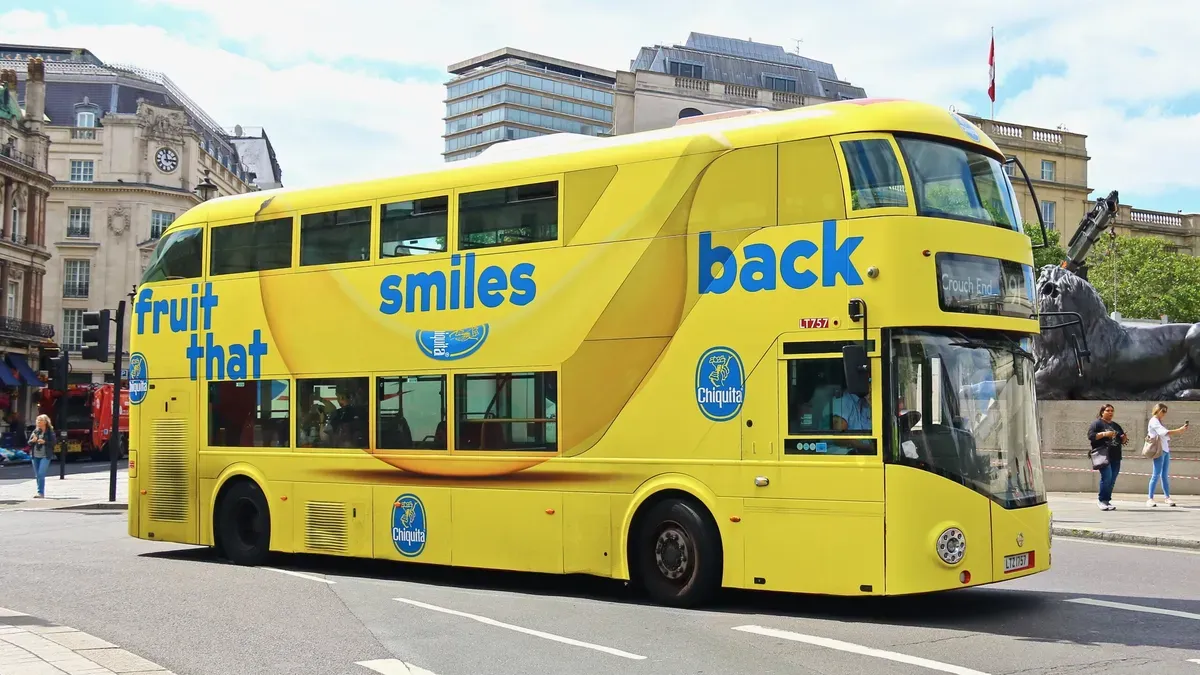
Full bus wraps give retailers a large creative canvas across the vehicle exterior.
They can suit major retail moments where a distinctive physical presence is important, including:
- Flagship launches
- New collections
- Christmas campaigns
- Major product releases
- Brand launches
The additional space does not mean every part of the bus needs to contain information.
For retail campaigns, one hero product, distinctive brand colours or a strong visual concept can make effective use of the vehicle while keeping the campaign easy to understand on the street.
Bus Sides
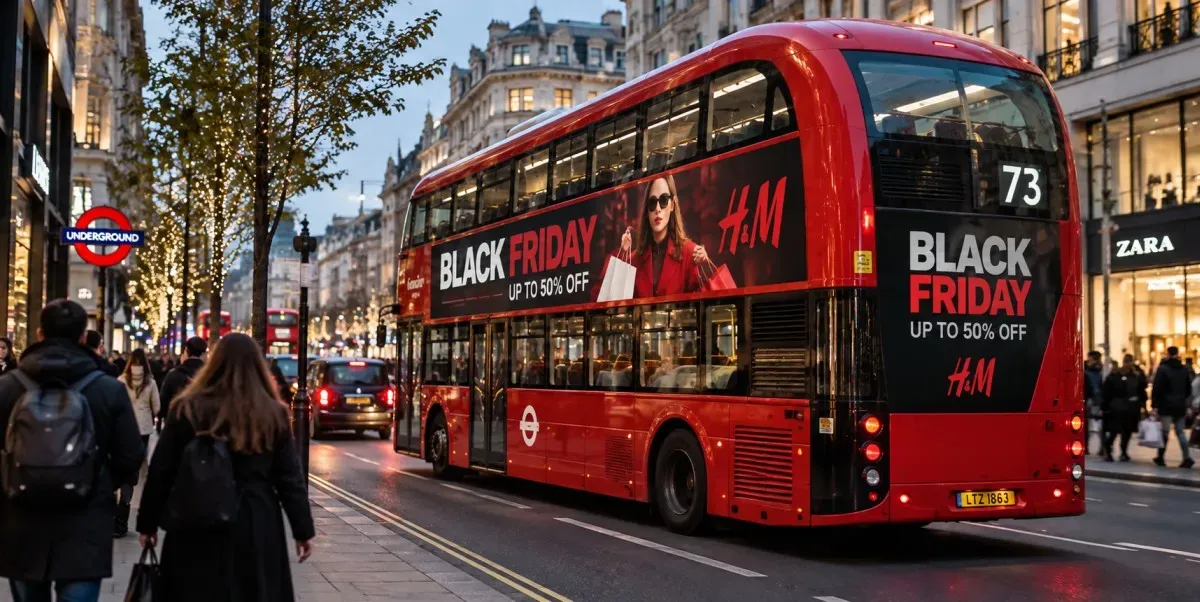
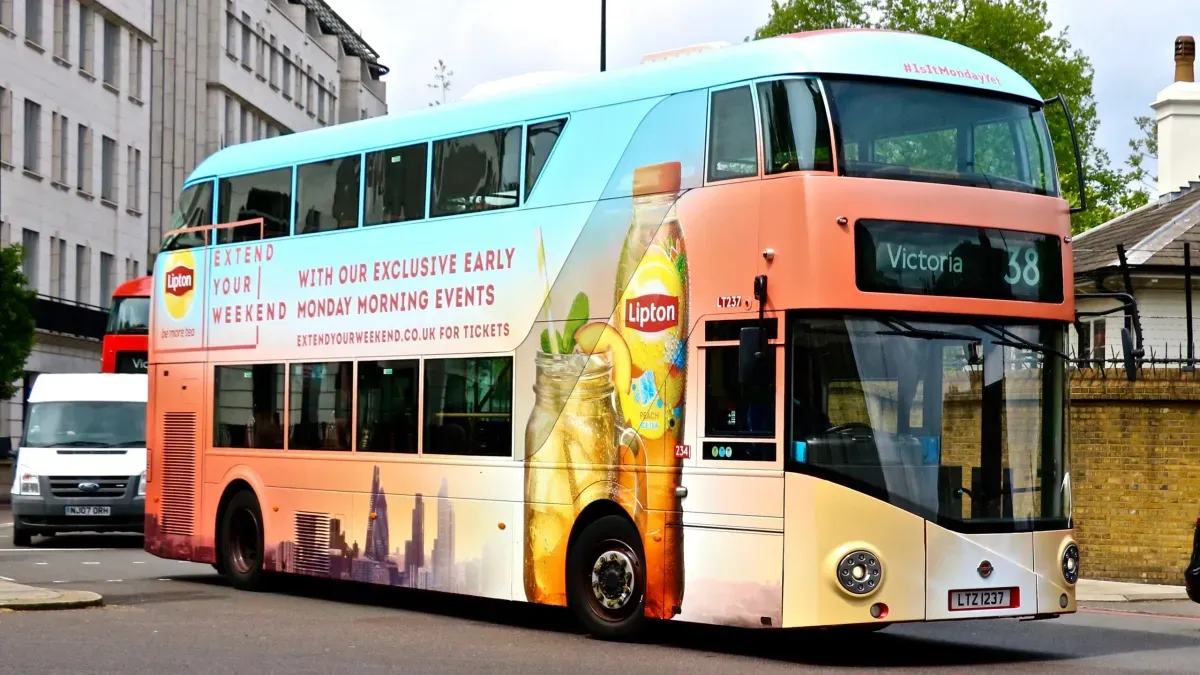
Bus side advertising can carry product and brand creative through high streets, commercial areas and everyday routes.
Supersides provide a substantial street facing canvas and are encountered by pedestrians, motorists and people around bus stops and junctions.
For retailers, this can work particularly well when the campaign has:
- Strong product photography
- A recognisable model or ambassador
- A new collection
- A simple promotional message
- Distinctive brand assets
The message needs to remain easy to process as the bus moves.
Bus Rears
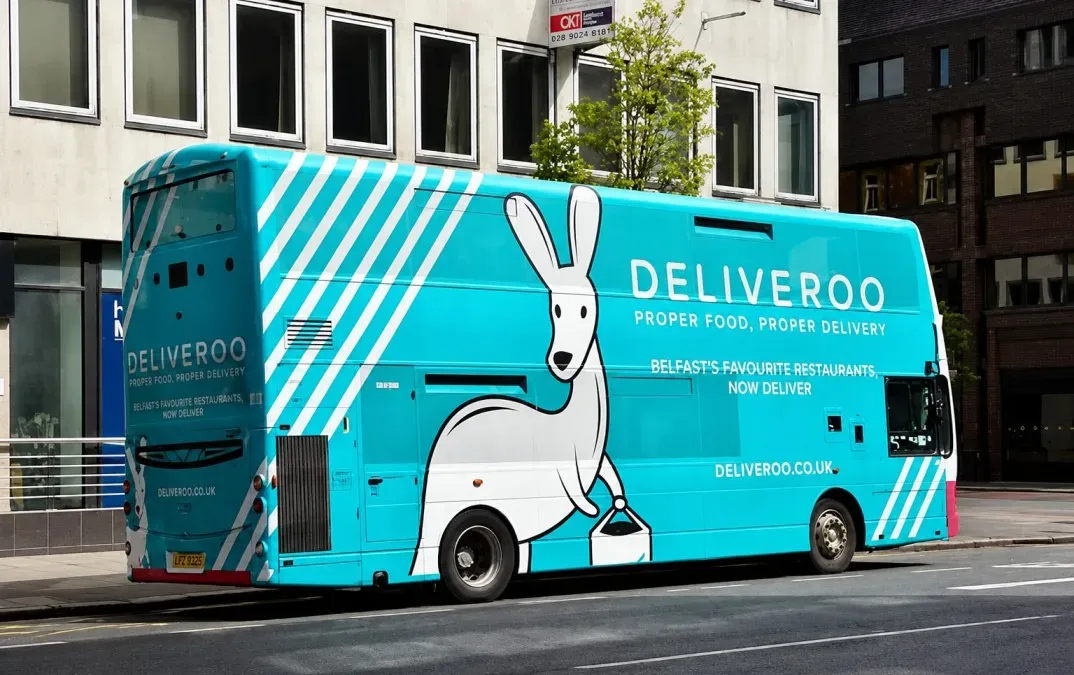
Bus rears face the traffic behind the vehicle and can work well for concise retail messages.
A retailer might use the format for:
- New store now open
- Sale now on
- Shop the new collection
- Available online
- A simple promotional offer
The strongest creative usually gives people one thing to remember rather than several competing messages.
Bus Interiors
Bus Interior advertising reaches passengers during their journey and can therefore carry information that needs more reading time.
This can include:
- Promotional codes
- Loyalty programmes
- QR codes
- App downloads
- Store information
- Product ranges
- Online shopping messages
This gives retailers an opportunity to structure exterior and interior creative differently. Exterior media can establish the product or campaign quickly, while interior advertising can provide a clearer next step.
Retail Creative Should Reflect the Desired Action
The creative for a store opening campaign should not necessarily look like a creative designed purely for brand awareness.
If store visits are the objective, useful information could include the location, opening date or a clear reason to visit.
If brand awareness is the objective, recognisable colours, products and brand assets can take priority.
For a product launch, the product itself may need to dominate the creative.
For a sale, the promotional message needs to be immediately understandable.
Across these scenarios, exterior bus creative generally benefits from:
- One clear message
- Strong branding
- Large, legible typography
- Recognisable product imagery
- Limited supporting copy
- A straightforward call to action where appropriate
People may encounter the advert while walking, driving or waiting at a junction. The creative should make sense within that viewing environment.
Seasonal Campaigns Need to Work Backwards From the Retail Moment
Retail has several important periods throughout the year, including:
- January sales
- Valentine's Day
- Easter
- Spring and summer collections
- Back to school
- Autumn launches
- Black Friday
- Christmas
For these campaigns, the key date should inform the media schedule.
If a product becomes available on a certain date, brands can plan backwards to determine when awareness needs to begin. A Christmas campaign may require visibility while customers are researching and buying gifts, while a short sale campaign needs its message to remain relevant throughout the promotional period.
This is also why booking early can matter. A fixed retail deadline leaves less flexibility if preferred formats or areas have limited availability.
Retail Bus Advertising Can Support More Than Physical Stores
Ecommerce retailers can benefit from bus advertising even when there is no physical location to promote.
For digital first brands, buses can create a real world presence within the cities where potential customers live and travel.
Campaigns might focus on:
- Brand awareness
- New product ranges
- Website visits
- App downloads
- Promotional codes
- Seasonal offers
- New market entry
The planning focus shifts from proximity to a store towards audience geography and repeated brand recognition.
This can be particularly relevant for an online brand that has built its customer base through digital channels and wants to establish greater physical visibility in a priority market.
Retail Campaigns Can Extend Across Several UK Cities
Retailers operating nationally should avoid assuming that every city needs exactly the same bus media plan.
A London flagship launch, Manchester store opening and Birmingham awareness campaign may each require a different level of route concentration and fleet coverage.
For every market, it is useful to consider:
- Where stores are located
- Where customers live
- Which shopping destinations matter
- How people travel towards those areas
- Which routes serve relevant audiences
- How much city coverage is required
Creative can remain recognisable across the campaign while location specific information changes where necessary.
This gives a national retail campaign consistency without ignoring local customer journeys.
Fleet Distribution Matters as Much as Fleet Size
Retailers often think about how many buses they need. Where those buses are distributed is equally important.
A larger fleet spread too widely may not suit a campaign intended to support one local store.
A concentrated fleet can create repeated visibility within a particular retail catchment. Broader distribution can make more sense when the objective is city wide familiarity.
In practice, brands should consider fleet size alongside:
- Route coverage
- Campaign duration
- Audience concentration
- Store locations
- Format
- Budget
This is one of the reasons the objective should be established before media is selected.
A Practical Framework for Retail Bus Advertising
For brands deciding how to approach a retail bus advertising campaign, the strategy can be simplified around the objective:
- For store footfall, prioritise relevant routes around the store catchment and make the location or reason to visit clear.
- For brand awareness, consider broader route distribution with consistent and recognisable creative.
- For a product launch, align media timing with availability and give the product a prominent role in the creative.
- For seasonal retail, plan backwards from the purchasing period and allow time to secure appropriate inventory.
- For ecommerce, focus route planning on audience geography and brand recognition rather than store proximity.
- For a multi-city campaign, assess each market individually before deciding route coverage and fleet distribution.
This framework keeps route, format and creative decisions connected to the commercial purpose of the campaign.
Planning Your Retail Bus Advertising Campaign
Effective retail bus advertising starts with the customer journey, campaign objective and locations that matter to the brand. These factors help determine the right routes, formats, fleet coverage and timing.
London Bus Advertising helps retailers plan bus advertising campaigns around these requirements, from route selection through to campaign delivery.
Planning a store opening, product launch or seasonal promotion? Get in touch with London Bus Advertising to discuss the right opportunities for your retail campaign.