Choosing the best bus routes for advertising in London is one of the most important decisions in any out-of-home (OOH) campaign. London has one of the most extensive and heavily used bus networks in the world, with hundreds of routes crossing different boroughs, audience types, and commercial zones. Because of this complexity, the effectiveness of a campaign depends far more on route selection strategy than simply placing an ad on any available bus.
A strong bus advertising plan in London is built by combining audience targeting, geographic analysis, commuter behavior, and visibility conditions. Below is a detailed guide to help you understand how to choose the most effective routes for your campaign.
1. Start with your target audience
The first and most important step is defining who you want to reach. In London, different bus routes naturally serve different demographic groups depending on geography, commuting patterns, and nearby landmarks.
For example:
- High-income professionals are concentrated around the City of London, Canary Wharf, Kensington, and Chelsea.
- Students and younger audiences are more present in areas like Camden, Shoreditch, Hackney, and parts of South London.
- Tourists frequently travel around Westminster, Trafalgar Square, London Bridge, and Oxford Street.
- Retail shoppers are heavily concentrated around Oxford Street, Westfield Stratford, Westfield Shepherd’s Bush, and major high streets.
- Families and suburban commuters are spread across outer borough routes such as Croydon, Bromley, Ealing, and Wimbledon.
Each bus route effectively acts as a “moving audience filter.” By selecting the right routes, you ensure your ad is repeatedly shown to the most relevant group instead of a broad, unfocused audience.
2. Focus on Central London routes for maximum exposure
If your primary goal is brand awareness and high visibility, Central London routes are usually the most effective starting point. These routes operate through high-density environments where traffic congestion is common, pedestrian activity is constant, and exposure time is significantly longer.
Key advantages of Central London routes include:
- Extremely high daily footfall and passenger volumes
- Continuous traffic congestion, increasing ad visibility time
- A mix of commuters, tourists, and residents in the same environment
- High repetition frequency due to dense route overlap
Areas such as Oxford Street, Piccadilly Circus, Leicester Square, Tottenham Court Road, and the City of London consistently generate strong advertising impact because buses move slowly through these zones. The longer a bus remains in view, the higher the chance of message retention and brand recall.
Central routes are especially useful for campaigns focused on mass awareness, brand launches, and national visibility.
3. Select routes based on “environment types” instead of numbers
A common mistake advertisers make is focusing only on route numbers (e.g., Route 8, Route 25). In reality, the environment a route travels through is far more important than its number.
London bus routes can be categorized into three major environment types:
a) Retail and shopping routes
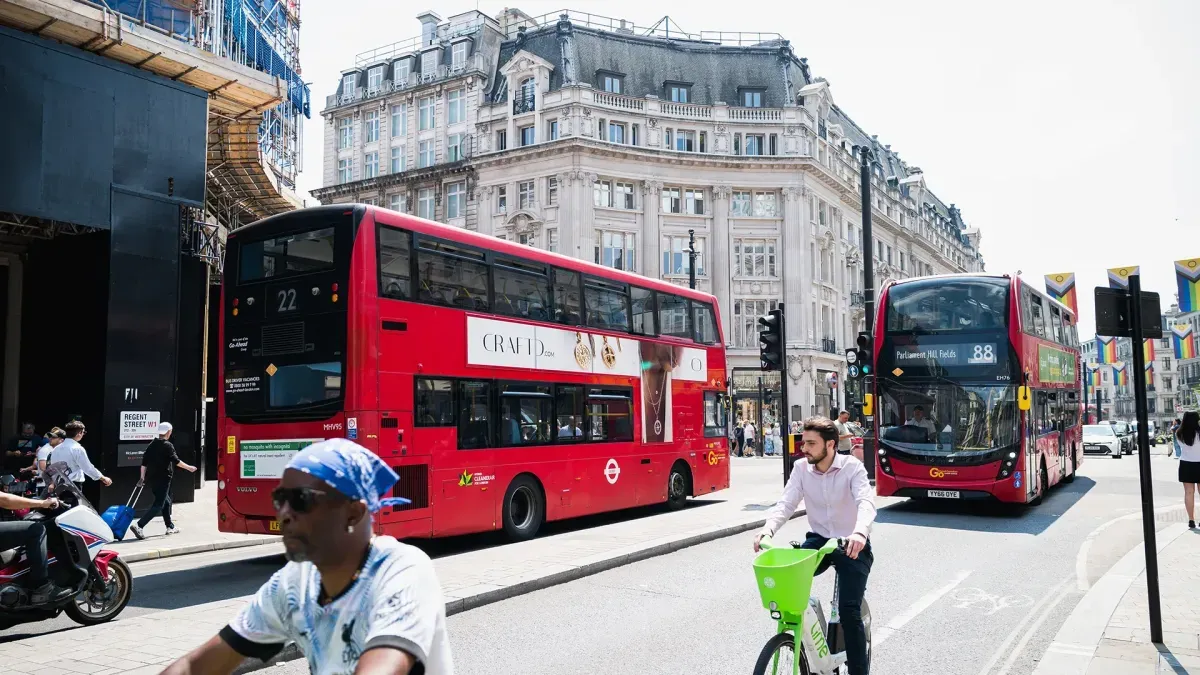
These are ideal for brands in fashion, FMCG, electronics, and lifestyle products. Routes passing through Oxford Street, Regent Street, Westfield shopping centers, and major high streets fall into this category.
Why they work:
- Passengers and pedestrians are already in a buying mindset
- High visual attention due to storefront-heavy environments
- Strong seasonal spikes (sales, holidays, events)
b) Commuter-heavy routes
These routes connect residential areas to business districts like the City of London and Canary Wharf. They are highly effective for B2B services, financial products, recruitment campaigns, and tech companies.
Why they work:
- Daily repeated exposure (morning and evening commutes)
- Stable and predictable audience
- Strong brand familiarity over time
Repeated exposure is particularly valuable here, as commuters see the same advertising multiple times per week, increasing memory retention.
c) Tourist and entertainment routes
These routes pass through iconic areas such as Westminster, South Bank, Tower Bridge, and Covent Garden.
Why they work:
- High volume of international visitors
- Strong emotional and visual engagement
- Ideal for hospitality, events, attractions, and entertainment brands
Tourist routes often provide global brand visibility because of the diverse audience mix.
4. Prioritise congestion-heavy routes for longer visibility
One of the unique advantages of London bus advertising is that traffic congestion actually increases ad effectiveness. Unlike digital advertising, where faster delivery is better, OOH advertising benefits from slower movement and repeated viewing time.
Routes passing through Central London often experience:
- Frequent stop-start traffic
- Long waiting times at intersections
- Dense pedestrian environments
This means your ad remains in view for longer periods, allowing viewers to absorb the message more effectively. In contrast, faster suburban routes may cover more distance but reduce exposure time per viewer.
Therefore, the most valuable routes are often those that are slow-moving but high-density.
5. Use route clustering for stronger brand domination
Instead of selecting a single bus route, high-performing campaigns often use route clusters. This means grouping multiple routes that pass through the same geographic or audience zone.
For example:
- Retail cluster: Oxford Street, Soho, Tottenham Court Road routes
- Financial cluster: City of London, Canary Wharf, London Bridge routes
- Creative cluster: Shoreditch, Hackney, East London routes
Route clustering ensures your brand appears repeatedly across a broader area, increasing frequency and dominance. This strategy is particularly effective for medium to large campaigns aiming for strong market presence rather than isolated exposure.
6. Match bus routes with advertising formats
Route selection should also be aligned with the type of bus advertising format used. Different formats perform better in different environments.
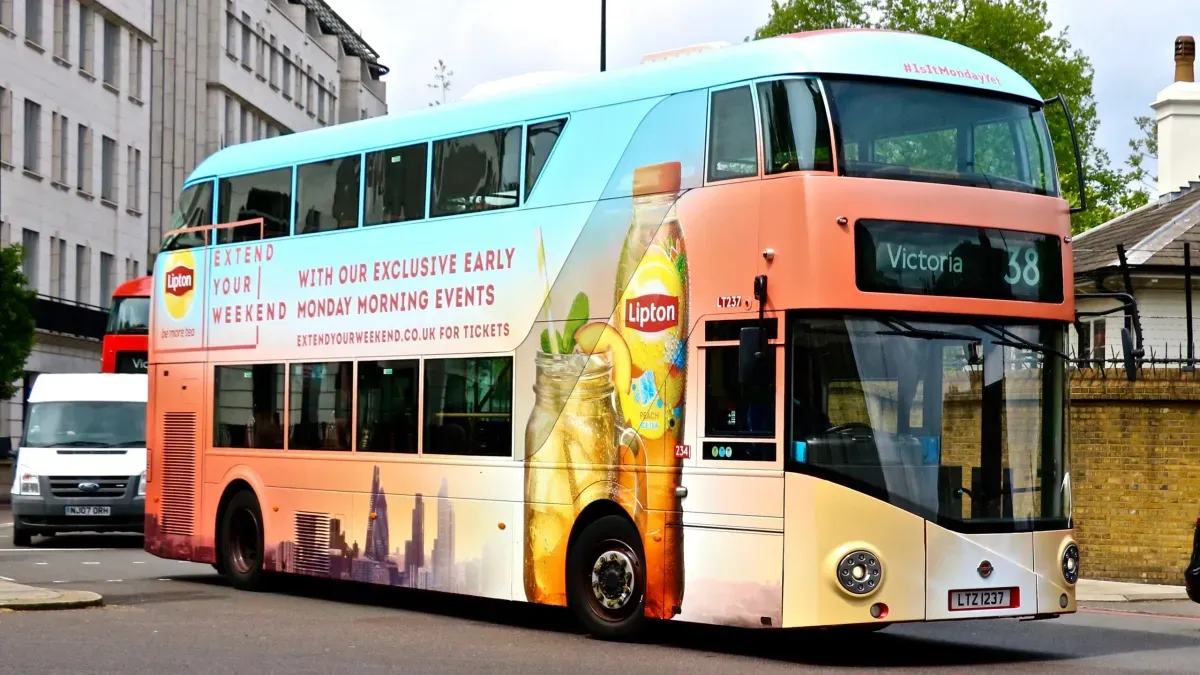
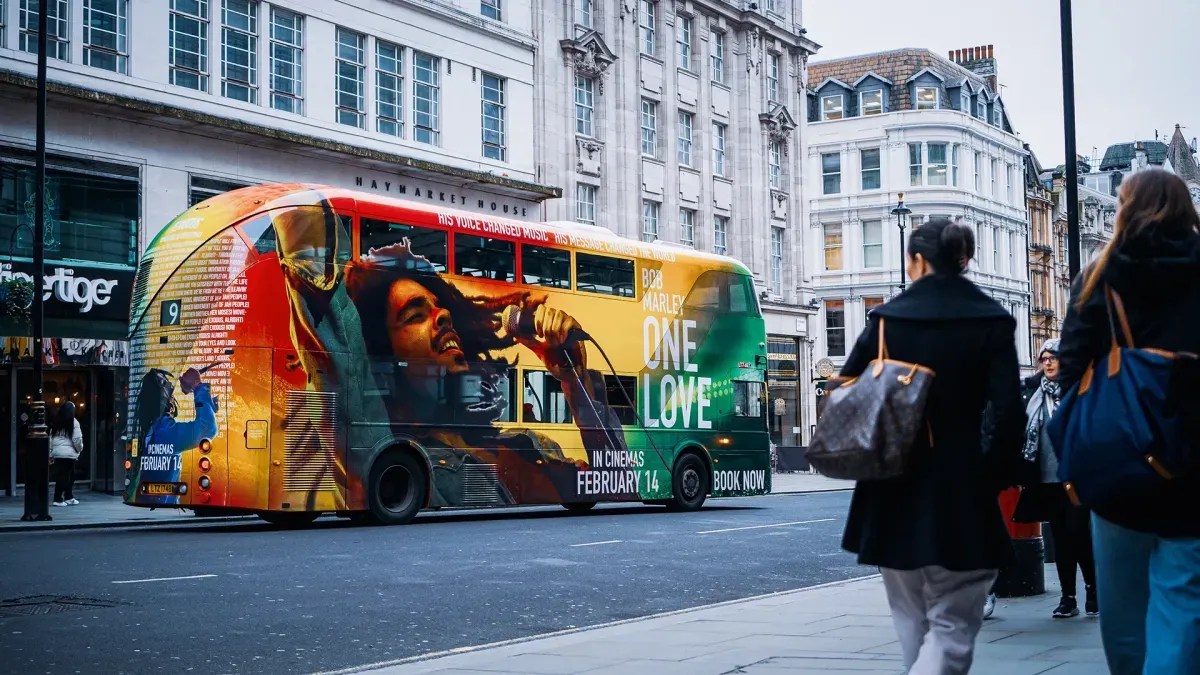
- Full bus wraps and supersides are best for central, high-traffic routes where maximum visibility is needed
- Rear bus panels work well on commuter-heavy routes where vehicles are often seen from behind in traffic
- Interior ads are effective on longer suburban routes where passengers spend more time inside the bus
When route and format are aligned correctly, campaign effectiveness increases significantly because the ad is seen in the most impactful way for that specific journey type.
7. Evaluate passenger volume and journey time
A key factor in route selection is understanding how many people use the route daily and how long they remain exposed to the advertisement.
Important metrics include:
- Daily passenger volume
- Average journey duration
- Frequency of stops
- Overlap with other transport modes (Tube, rail, walking routes)
London buses collectively carry millions of passengers every day, but not all routes contribute equally to exposure. Routes with longer journey times and higher passenger density naturally produce stronger campaign results.
8. Use data and Transport for London (TfL) insights
In professional advertising planning, route selection is rarely done manually. Agencies and brands rely on data from Transport for London (TfL), mobility studies, and out-of-home analytics platforms.
These tools help identify:
- Passenger flow patterns
- Peak travel times
- Demographic distribution by borough
- High-impact intersections and corridors
This data-driven approach ensures that campaign decisions are based on real movement patterns rather than assumptions.
9. Consider seasonal and time-based variations
London’s bus network changes in effectiveness depending on season and time of year.
For example:
- Summer increases tourist route performance
- Winter boosts commuter route consistency
- Holiday seasons significantly increase retail corridor impact
A strong strategy adjusts route selection based on when the campaign runs, not just where it runs.