Exhibitions and events have a fixed window to attract attention. Whether the goal is to sell tickets, increase registrations or drive attendance, potential visitors need to discover the event early enough to make plans.
Bus advertising can be effective for exhibitions and events because it builds visibility across the areas where potential visitors travel before and during the event. In London, buses move through residential neighbourhoods, shopping areas, business districts, entertainment destinations and major transport hubs, allowing an event campaign to extend well beyond the venue.
The strongest campaigns are planned around more than the event location. Audience movement, campaign timing, bus routes, advertising formats and the amount of information people need before attending should all influence the media plan.
Why Is Bus Advertising Effective for Exhibitions and Events?
Bus advertising gives event organisers the opportunity to build repeated visibility across London.
A potential visitor may first see an exhibition advertised during their commute and encounter the campaign again while shopping or travelling through the city several days later. This repeated exposure can help reinforce the event name, date and reason to attend.
Buses also take the campaign beyond the streets surrounding the venue. This matters because people attending a London exhibition may live, work or stay several miles away.
For event organisers, the objective is therefore not simply to put advertising near the venue. It is to identify where potential visitors are likely to travel before the event and build visibility in those areas.
How Early Should Bus Advertising Start Before an Event?
Bus advertising should begin early enough for people to discover the event and decide whether they want to attend. The appropriate campaign length depends on the event type, ticketing model and amount of planning required from visitors.
A major ticketed exhibition may need a longer awareness period because visitors could be comparing dates, arranging travel or booking tickets in advance. A free weekend event may work with a shorter promotional period.
Campaign messaging can also change as the event gets closer. Early activity can introduce the event and its main attraction. Later messaging can give greater prominence to the opening date, ticket availability or the limited time remaining to book.
The important point is that the advertising period should reflect the visitor's decision making period, rather than starting simply because the event itself is about to begin.
Should You Advertise Near the Venue or Where Your Audience Travels?
Both can be valuable, but they perform different roles.
Advertising near the venue builds a visible presence around the event location. Advertising across areas used by the target audience can introduce the event much earlier in their journey.
Consider an exhibition at ExCeL London. Potential visitors may be travelling from central London, residential areas, hotels or major railway stations. International delegates may be staying elsewhere in the capital and only travel towards ExCeL on the day they attend.
Concentrating the entire campaign immediately around the venue could therefore miss opportunities to reach those people beforehand.
For a family exhibition, relevant residential and leisure areas may deserve greater attention. For a trade event, commercial districts, delegate hotels and connections with major transport hubs could be more important.
This is a useful distinction when planning London bus advertising:
Venue proximity tells you where the event takes place. Audience movement helps determine where the event should be promoted.
Use the Venue as Part of the Location Strategy
The venue still has an important role in route planning.
London hosts exhibitions and events across destinations including ExCeL London, Olympia London and the Business Design Centre. Relevant bus routes around these locations can help reinforce the campaign as visitors approach the event area.
This can be particularly useful immediately before the event and while it is taking place.
For longer exhibitions, local visibility can also reach people who regularly work, live or spend time near the venue but have not yet decided to attend.
The best plan can therefore combine wider audience coverage with more concentrated visibility around the event location, subject to suitable bus and media availability.
Which Bus Advertising Formats Work for Events?
The right bus advertising format depends on the campaign objective, budget and amount of information that needs to be communicated.
Full Bus Wraps
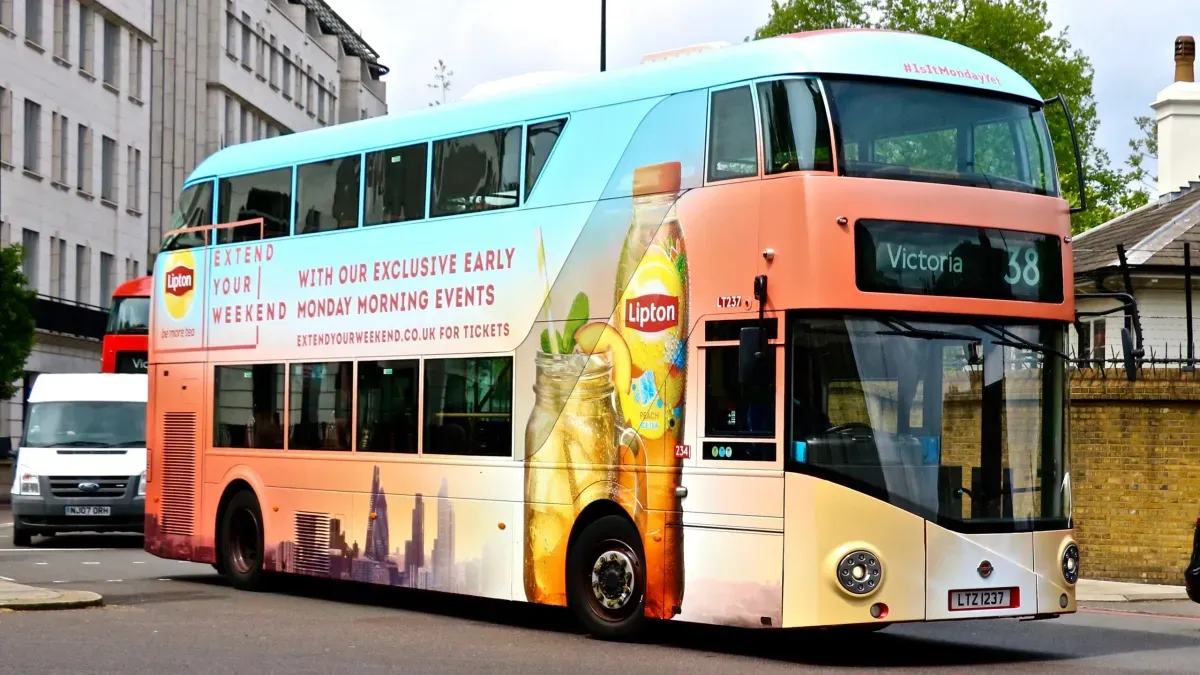
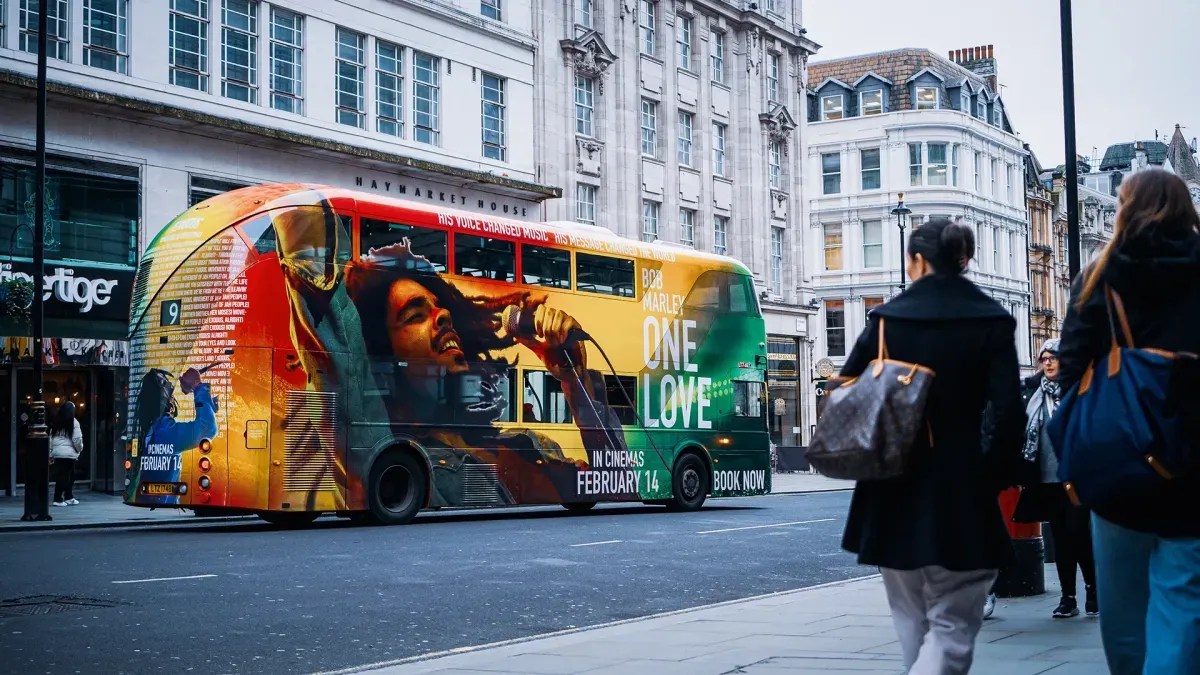
A full bus wrap turns most of the exterior of the vehicle into the event creative.
The large advertising area can work particularly well for exhibitions, entertainment launches and major events with a distinctive visual identity. Rather than looking like a standard event poster, the bus itself can become a recognisable part of the campaign.
A distinctive wrapped bus may also generate additional value through photography, social content and other event marketing activity.
T-Sides and Supersides
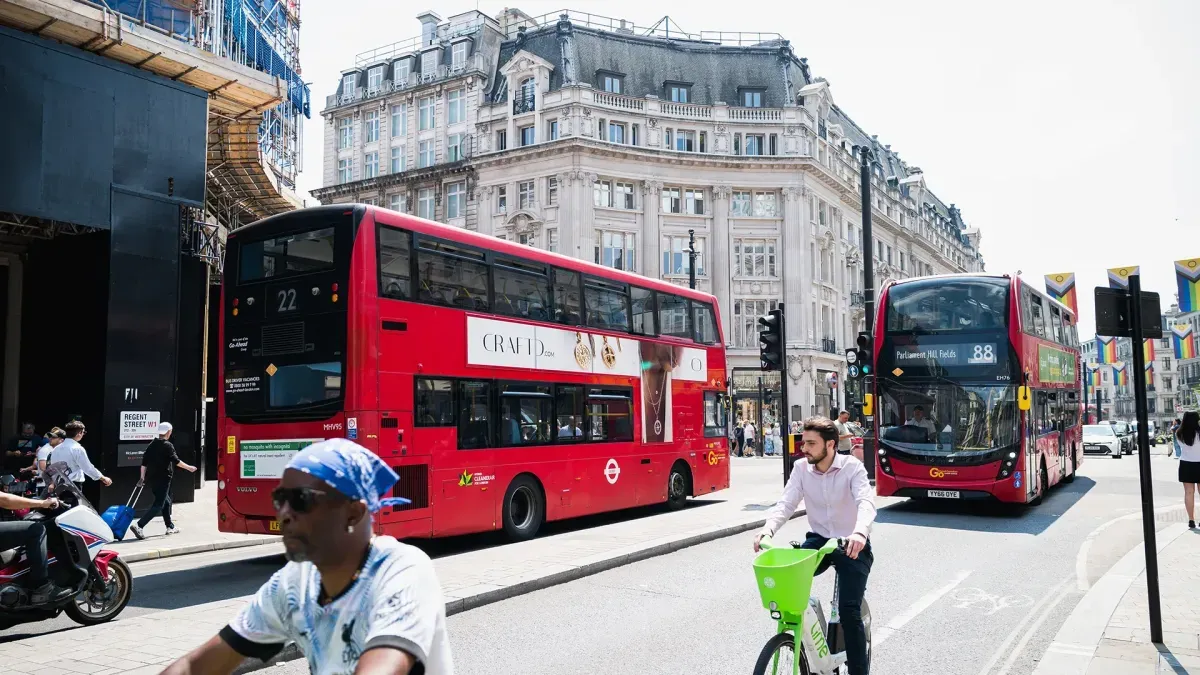
T-sides and supersides provide prominent advertising space along the side of the bus.
They can work well when an organiser wants strong street level visibility without using a full wrap. The event name, key visual and date can be displayed prominently and understood relatively quickly.
These formats generally benefit from concise creative rather than detailed schedules or lists of exhibitors.
Bus Rear Advertising
Bus rears reach motorists and other road users travelling behind the vehicle.
London traffic can create periods when vehicles remain behind a bus for longer, but the main message should still be straightforward. Event name recognition, dates and a simple call to action are usually more useful than excessive detail.
Bus Interior Advertising
Bus Interior advertising formats reach passengers while they are travelling and create a different viewing environment.
Because passengers may have longer to view the advertising, the campaign can potentially provide more information about tickets, speakers, attractions or registration.
This creates a practical distinction when choosing formats. Exterior media is generally suited to fast event recognition, while passenger facing media can support a more detailed message.
What Should an Event Bus Advert Include?
An effective event bus advert should make the event name, date and main reason to attend easy to understand.
The challenge is deciding what to leave out.
Event organisers often have speakers, exhibitors, activities, sponsors and programme information they want to promote. Trying to include everything can make roadside creative difficult to process.
A person may see the side of a bus for only a short period. The creative should therefore answer three questions quickly:
- What is happening?
- When is it happening?
- Why should I be interested?
The venue and a clear next step can be included where relevant.
Detailed schedules and supporting information are better suited to the event website and other channels where audiences have more time to engage.
Extend the Exhibition Beyond the Venue
One of the more useful roles of bus advertising is its ability to make an exhibition visible outside the building where it takes place.
A major exhibition may occupy one venue, but its potential audience is spread across London.
Branded buses can carry the event identity into shopping districts, business areas, residential neighbourhoods and other parts of the capital. This can make the campaign feel more established across the city as the opening date approaches.
It is particularly relevant for exhibitions seeking visitors from outside London.
Someone arriving at King's Cross St Pancras, Euston, Waterloo, Victoria or another major transport hub may still have a substantial journey before reaching the venue. Where suitable routes are available, bus advertising can reinforce the event during their wider experience of London.
The value comes from identifying transport hubs that genuinely connect with the visitor journey, rather than choosing them solely because they are busy.
How Long Should an Event Bus Campaign Run?
Campaign duration should reflect how long people have a realistic opportunity to attend.
For a one day event, most advertising value is concentrated before the event. A week-long exhibition can continue attracting visitors after opening, while an exhibition running for several months may justify a much longer campaign.
The message can also evolve during that period.
Before opening, the creative may focus on the event date and advance bookings. Once a longer running exhibition opens, messaging can communicate that it is now open. Towards the end, the campaign can highlight the final weeks or final weekend where appropriate.
This makes campaign duration a strategic decision rather than simply a media booking period.
Connect Bus Advertising With Ticket Sales and Registrations
Seeing a bus advert will not always lead to an immediate ticket purchase.
A person may notice the event during their morning commute, remember the name and search for it later. Someone who has already heard about the exhibition may see the bus campaign and be reminded to book.
This makes consistency important.
The event name, visual identity and key message used on the bus should be recognisable when someone later encounters the website, search results or social content.
Calls to action should also reflect viewing conditions. A memorable event name or short web address can work well on exterior formats. QR codes are generally more practical in longer dwell passenger environments where people have enough time to interact with them.
The aim is to make the journey from seeing the event to finding information and booking as simple as possible.
Planning Bus Advertising for Exhibitions and Events in London
An effective exhibition campaign starts by understanding who needs to attend, where those people travel and how far in advance they make the decision to visit.
At London Bus Advertising, our experience across the capital helps us plan campaigns around relevant routes, audience locations, event venues, campaign dates and suitable formats.
For some events, broad visibility across London may be appropriate. Others benefit from a more focused strategy around particular audience areas, business districts, transport connections or the venue itself.
The objective is to give the event a visible presence before the doors open and keep it relevant while potential visitors still have an opportunity to attend.
Get in touch with London Bus Advertising to discuss your exhibition or event and explore suitable bus advertising opportunities across London.