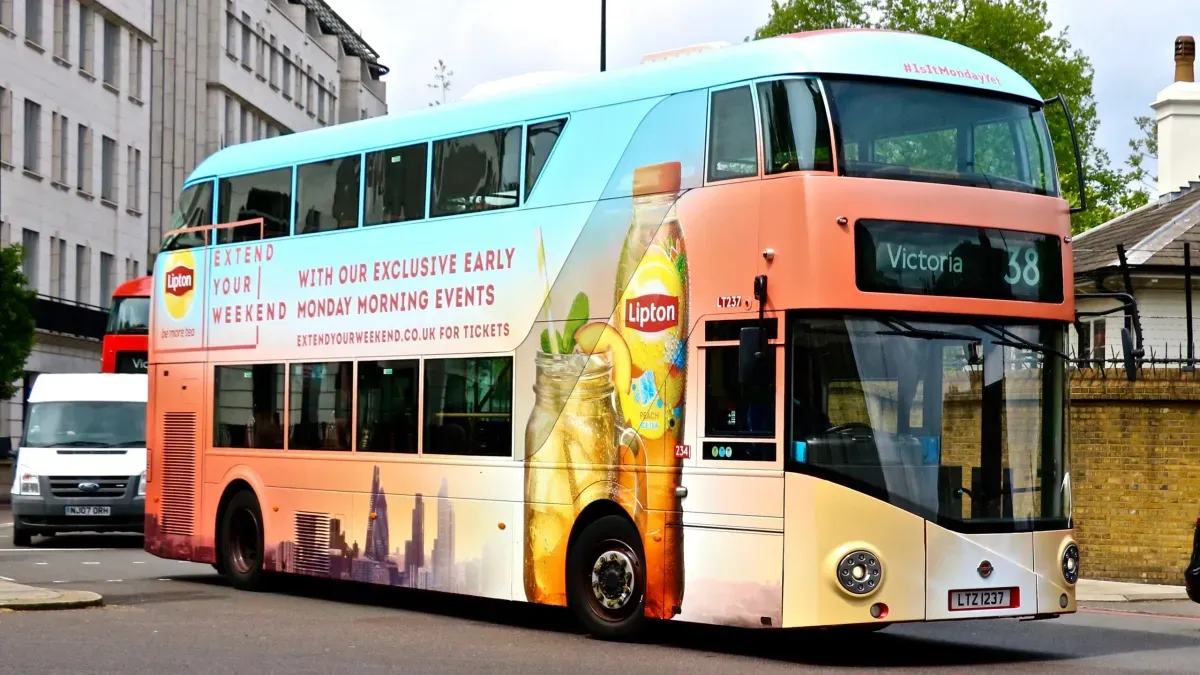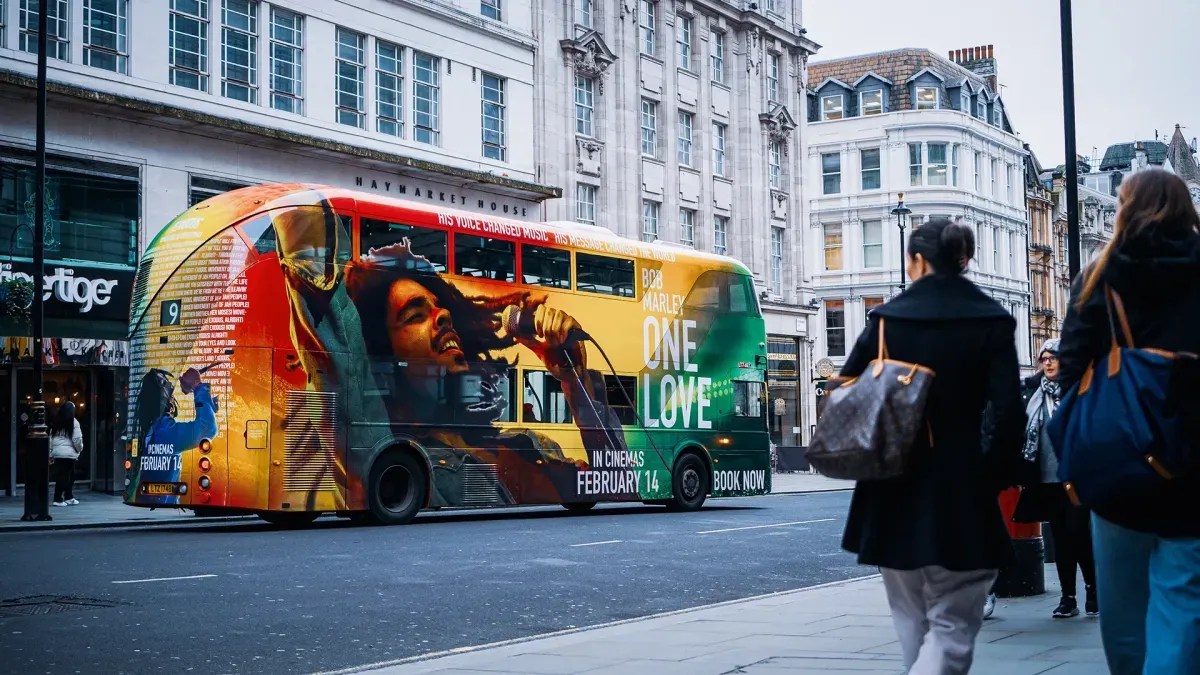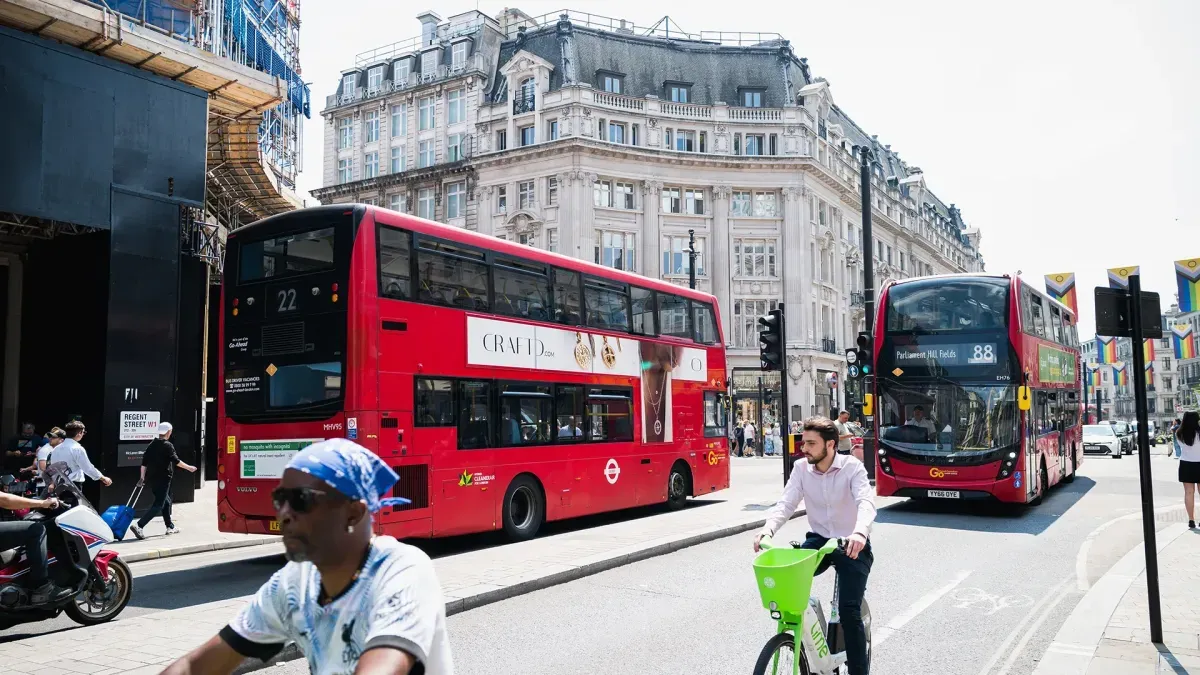
The best areas for bus advertising in London depend on who you want to reach, where they spend time and what you want the campaign to achieve.
A retail campaign may prioritise the West End or Stratford. Financial and B2B brands may focus on the City and Canary Wharf. Entertainment and lifestyle campaigns may find areas such as Shoreditch, Camden and the West End more relevant.
London's bus network provides substantial scale. More than five million bus journeys are made on a typical day, according to Transport for London.
The goal is therefore not simply to choose London's busiest area. It is to identify the parts of the city where bus coverage puts your campaign in front of the right audience.
Oxford Street and the West End
Oxford Street, Regent Street, Soho and the wider West End combine major shopping streets with offices, restaurants, hotels, theatres and entertainment venues.
This audience mix makes the area particularly relevant for fashion, beauty, retail, entertainment, hospitality and consumer brands. It can also support store openings, product launches and seasonal retail campaigns.
Routes travelling through areas such as Oxford Street and Tottenham Court Road can give exterior bus formats visibility among pedestrians and road users as well as passengers.
For brands with physical stores nearby, bus activity can also extend the campaign beyond the immediate storefront and into the wider shopping catchment.
Westminster
Westminster can be valuable when a campaign needs exposure among a mixture of London residents, workers and visitors.
The wider area includes Westminster, Whitehall, Trafalgar Square and other major cultural and visitor destinations. These locations can make it particularly relevant for travel, tourism, entertainment, attractions, hospitality and large awareness campaigns.
Creative should remain clear and easy to understand. Visitor audiences may have fewer opportunities to encounter the campaign repeatedly, so recognisable branding and a simple message become particularly important.
City of London
The City is one of the most relevant parts of London for campaigns targeting professional audiences.
Bus routes serving the Square Mile travel through and around concentrations of offices, financial institutions and major transport connections.
This can make the area useful for financial services, fintech, technology, recruitment and B2B campaigns.
The wider journey is worth considering as well. Professional audiences do not spend their entire day within the City. Routes connecting business districts with surrounding residential and leisure areas can give a campaign opportunities to remain visible beyond working hours.
Canary Wharf
Canary Wharf combines a major office district with retail, hospitality and a growing residential population.
For finance, technology, professional services, property and premium consumer brands, this creates opportunities to reach audiences travelling into and around one of London's major business districts.
Campaign planning can also consider surrounding East London areas rather than concentrating exclusively on Canary Wharf itself. This can extend visibility across parts of the audience's wider journey.
Shoreditch and Hackney
Shoreditch and Hackney can be particularly relevant for brands looking to reach younger urban audiences across areas associated with technology, fashion, nightlife and creative industries.
This makes them useful considerations for apps, technology, entertainment, food, fashion and lifestyle campaigns.
Highly visual campaigns can work particularly well in these street environments. Full bus wraps and prominent side formats can carry distinctive creative through several neighbourhoods during the course of a journey.
Stratford
Stratford brings together retail, transport, residential areas and leisure destinations within a major East London centre.
Its shopping environment and transport connections can make it relevant for retail, entertainment, food, sports and mass consumer campaigns. Stratford is also identified as one of London's important retail environments when planning bus routes around shopping audiences.
Brands can use Stratford as part of a broader East London strategy, particularly when the target audience extends into surrounding residential areas.
Kensington and Chelsea
Kensington and Chelsea can suit campaigns where affluent residential and consumer audiences are particularly relevant.
The area's mix of premium shopping, hospitality, residential neighbourhoods and visitor destinations can support luxury, fashion, beauty, automotive, property and travel campaigns.
Location planning should still follow the specific audience. A campaign promoting a luxury store may require different coverage from a property development or hospitality campaign operating within the same borough.
Camden
Camden combines residential neighbourhoods with shopping, music, nightlife, tourism and a sizeable younger audience.
It can therefore be a useful location for entertainment, fashion, food, technology, education and youth focused campaigns. Camden is among the areas identified as having stronger concentrations of students and younger audiences for bus route planning.
Choose London Areas Around Your Audience
There is no single part of London that suits every bus campaign.
The West End can provide access to retail, leisure and visitor audiences. The City and Canary Wharf can support campaigns aimed at professionals. Shoreditch, Hackney and Camden can be relevant for younger and lifestyle audiences, while Stratford provides a strong East London retail and transport environment.
Outer London can be equally important when the campaign depends on local customers and specific communities.
The strongest starting point is that you need to identify the people you need to reach and the parts of London that matter to them, then build the bus coverage around those locations.
Want to identify the right areas for your campaign? Get in touch to discuss your audience, target locations and suitable bus advertising options.